Public locations
Visitors can browse visible countries, regions, cities, and areas.
Dashboard
Wählen Sie ein Reiseziel, vergleichen Sie praktische Reisedetails, entdecken Sie empfohlene Orte und speichern Sie alles in Ihrer Reise.
Suche
Suchen Sie Reiseziele, Plätze, Erlebnisse und Guides.
Need ideas? Not sure where to go? Tell us what you enjoy — beaches, cities, nature, food — and we’ll suggest destinations.
Research destinations and book early for better deals.
Explore local markets and engage with community life.
Pack essentials only and leave room for souvenirs.
Keep copies of documents and share your itinerary.
Learn local customs and support local businesses.
Photograph moments, then put the phone down and enjoy.
Verify your listing, unlock licensed features, photos, offers, and optional advertising — all from Plans.
Let’s turn your travel dreams into unforgettable experiences.
Entdecken
Reiseziele entdecken
Browse continents, countries, and cities with traveler-friendly context.
Durchsuchen
Suchen Sie Länder nach Name oder Code, filtern Sie nach Kontinent und sortieren Sie A–Z oder nach Interesse von Reisenden.
Verzeichnis
City guide
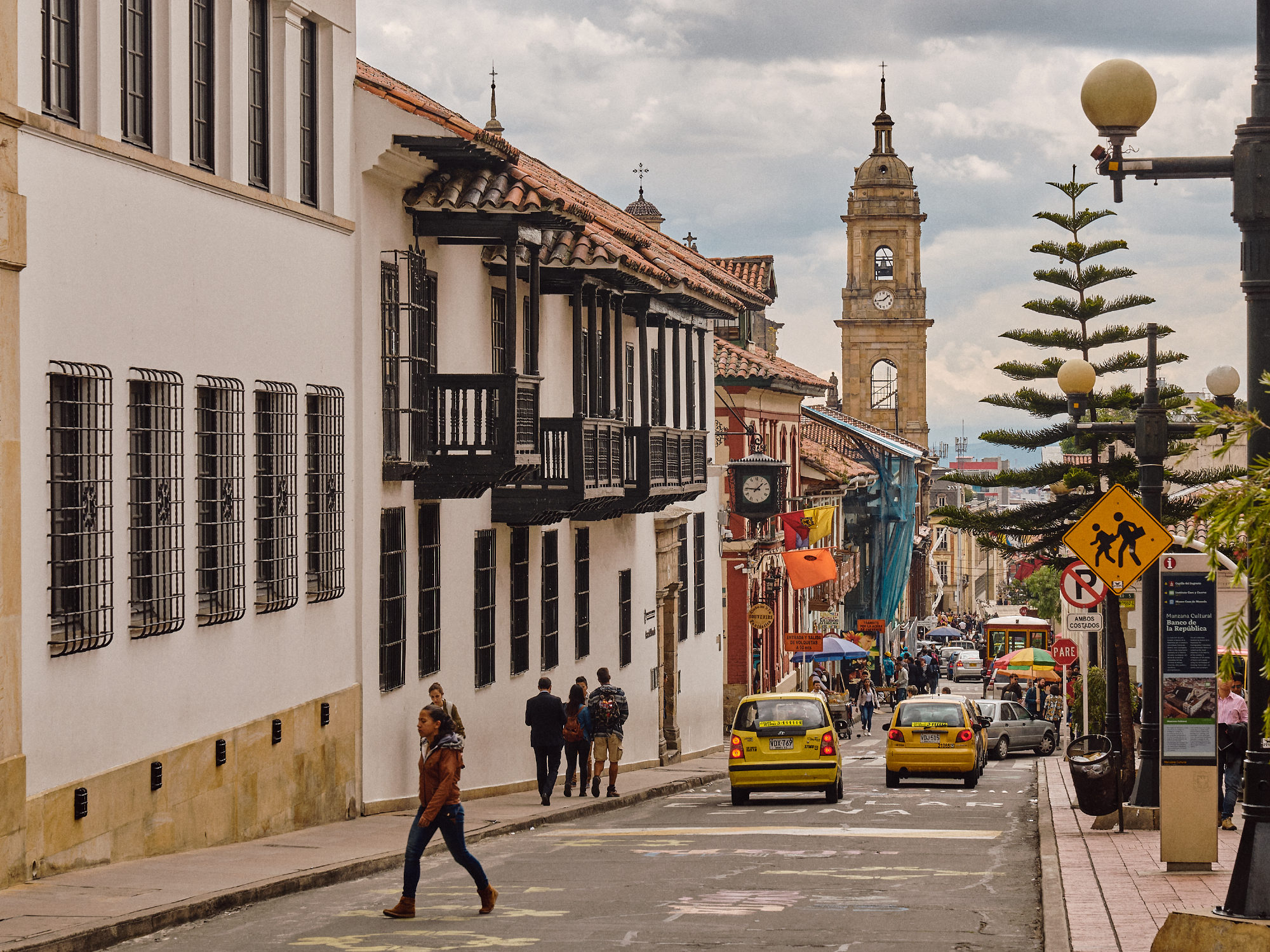
Bogotá is a high-altitude Andean capital where colonial La Candelaria, world-class museums, and a famously ambitious street-art scene sit at 2,600 meters above sea level.
The Museo del Oro holds roughly 55,000 gold artifacts (6,000 on display), founded in 1939 and now drawing around 500,000 visitors a year, including the Muisca golden raft, the archaeological find that helped inspire the legend of El Dorado.
Cerro de Monserrate rises to 3,152 meters, its sanctuary built 1650-1657, reachable by cable car or funicular, a genuinely dramatic city viewpoint that most South American capitals simply don't have the topography for.
Plaza de Bolívar, laid out when Bogotá was founded in 1538, remains ringed by the working seats of Colombia's national government, judiciary and city hall, not a preserved-in-amber tourist square, but the country's actual civic center.
The founding square, cathedral, and presidential palace.
The Gold Museum, Botero Museum, library and the city's founding plaza.
Two very different ways to see Bogotá from above.
A large city park and the colonial-era Usaquén district in the north.
Plaza de Bolívar and La Candelaria's museums, finishing with the Monserrate viewpoint.
A city park, a modern viewpoint, and Usaquén's colonial plaza and Sunday market.
A slower pace covering the historic center, museums, and both viewpoints.
El Dorado International Airport sits in the Fontibón district, about 15km from downtown Bogotá, and is itself at 2,548m elevation. Taxi/ride-hailing and the TransMilenio bus system both connect the airport to the city center, typically 30-45 minutes depending on traffic.
El Dorado International Airport (Wikipedia)Discovered in Pasca in 1969, the small gold Muisca raft depicts a ceremony believed to be the source of the El Dorado myth, a Muisca ruler covering himself in gold dust and making offerings on a lake. The museum's collection was seeded by the Poporo Quimbaya, acquired by the Bank of the Republic in 1934.
Gold Museum, Bogotá (Wikipedia)At 3,152m, Monserrate sits over 500m above the already-high city center (2,600m). Some visitors feel the elevation change even on the short cable car or funicular ride up. Take it easy for the first day or two in Bogotá generally, given the city's own high altitude.
Monserrate Sanctuary (Wikipedia)Traditionally considered the site where Bogotá was founded in 1538, this small plaza is now a lively evening gathering spot ringed by bars and street art, a good anchor point for exploring the rest of La Candelaria's colonial streets on foot, by day.
La Candelaria, Bogotá (Wikipedia)Beyond Fernando Botero's own distinctively voluminous paintings and sculptures, the free museum (donated by the artist) includes works from his personal collection, pieces by Picasso, Monet, Dalí and others, inside a colonial-era mansion in La Candelaria.
Museo Botero (Wikipedia)The US State Department rates Colombia Level 3 (Reconsider Travel), citing crime, terrorism, civil unrest and kidnapping risk. The named do-not-travel areas are Arauca, Cauca (excluding Popayán) and Norte de Santander departments, plus the Colombia-Venezuela border region, all well outside Bogotá, which sits in central Colombia. UK FCDO guidance is similar: no no-go areas are named within Bogotá itself. Standard big-city precautions still apply in the capital: stick to well-touristed areas and avoid displaying valuables, especially outside La Candelaria and the northern business districts after dark.
Colombia Travel Advisory (US Department of State)Guide reviewed 2026-08-18.
Öffentliches Verzeichnis
Find restaurants, beaches, attractions, and other helpful places worldwide.
Suche
Nach Region und Typ filtern oder Name/Küche eingeben. Küchenbegriffe funktionieren in allen sechs unterstützten Sprachen und in beliebiger Reihenfolge, z. B. „Murnau indisch“ oder „Indian Murnau“. Fehlt ein Platz, können angemeldete Nutzer mit bestätigter E-Mail und aktivem Konto danach OpenStreetMap durchsuchen (Universal Finder).
Die 12 beliebtesten Plätze für Ihre aktuellen Regions- und Typfilter.
Öffentliche Geschichten
Durchsuchen
Nach Likes von Reisenden sortiert. Jede Person kann eine Geschichte einmal liken und den Like jederzeit entfernen.
Browse
Read Top liked stories above, or share your own tips after you sign in. Groups are great when you want a quick conversation.
Verzeichnis
Noch keine freigegebenen Reiseerlebnisse.
Share a trip story after you sign in — approved experiences appear here for other travelers.
Traveler account
Share helpful travel experiences, recommend real places, upload trip photos after review, and keep your own private trip plans in one place.
Profile
Use Sign in in the top-right menu to log in, register, or reset your password.
Checking account status…